We’ve found the best TVs for you, with the best budget options along with 4K and 8K TVs
The Samsung QN90A Neo QLED is the best TV we've reviewed, delivering superb picture quality with its combination of QLED color and mini-LED backlight (the ingredients that make up Neo QLED). Pair that performance with fantastic sound, rich smart features and a stylish design, and you've got the best TV we've reviewed recently. Just be aware that this premium 4K smart TV doesn't come cheap.The LG C1 OLED is also among the top TVs you can buy. It features a gorgeous OLED panel; it's a great 4K smart TV, and it's the best gaming TV we've ever seen. The TCL 6-Series Roku TV (R635) is the ultimate in affordable TVs, giving you the best 4K smart TV we've seen for less than $1,000. In fact, ignoring the budget-friendly price, it's still one of the best TVs on the market, thanks to a quantum-dot enhanced LCD and mini-LED-backed display and feature-rich Roku TV interface. Combine this with superior gaming features and a refined design, and it's got plenty to love.
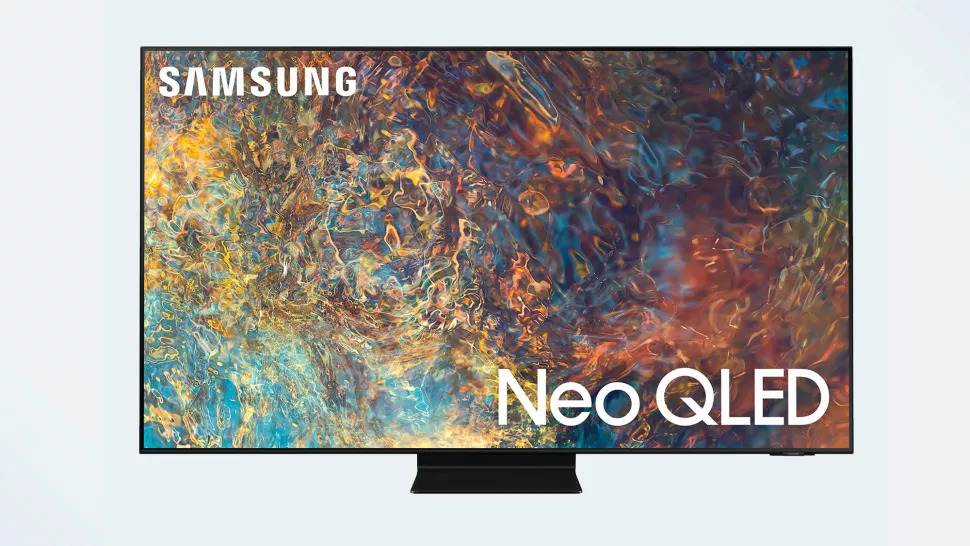
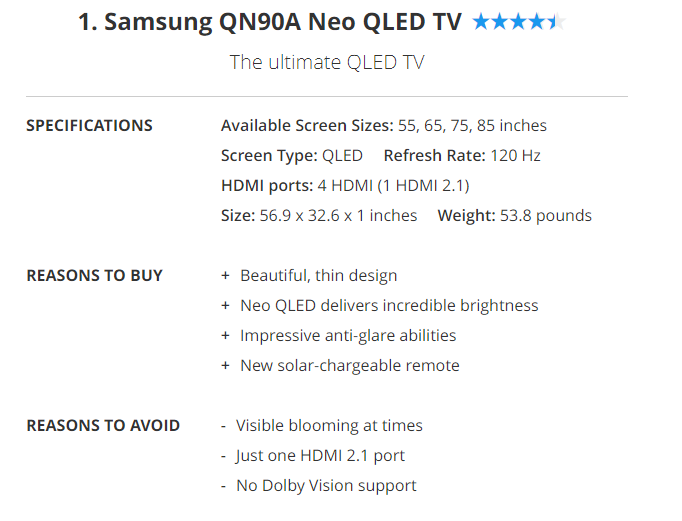
The Samsung QN90A Neo QLED TV combines Samsung's highly refined quantum dot technology with the tight control of mini-LED backlighting, resulting in one of the best TV displays you'll ever see. Brilliant color and unmatched brightness make for superb performance, and Samsung pairs that with a bounty of smart TV functions and genuinely intelligent features, like a solar-powered remote control that eliminates the need to swap out batteries – delivering eco-friendly design and unbeaten convenience at the same time.The whole thing is packed into a gorgeous 1-inch-thick design that contains a huge array of smart features, potent Dolby Atmos sound and some of the best performance we've ever seen. HDMI 2.1 connectivity comes standard, along with gamer-friendly features and impressive 12.6-millisecond lag time for an unparalleled gaming experience. It's the best TV we've seen in the past 12 months.
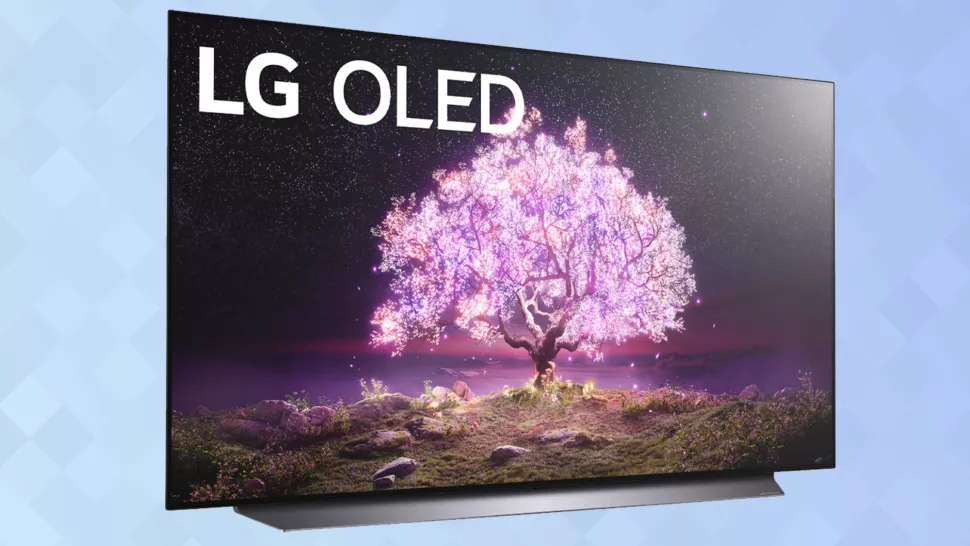
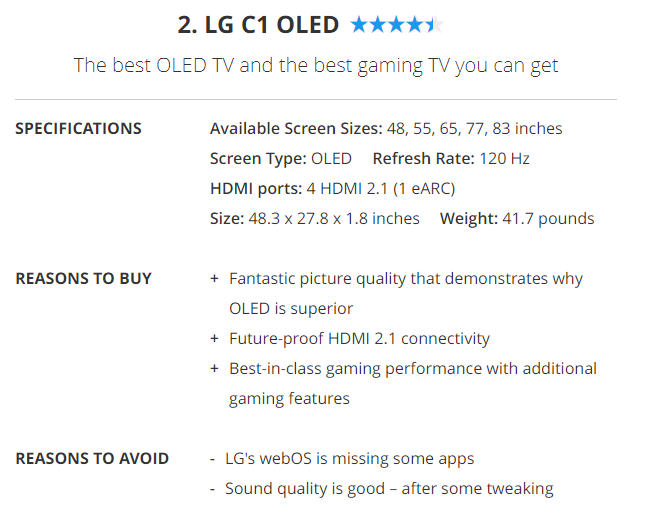
The LG C1 OLED is a fantastic value among premium TVs, offering an amazing OLED display, a full complement of HDMI 2.1 ports, and the best gaming performance and features you can get. The display offers rich picture quality with impeccable contrast and sharpness, superb HDR support and gaming performance that beats everything else we've seen. Combine all of that with a stunning design and better-than-average sound, and you've got one of the best TVs you can buy.LG's webOS faces stiffer competition on app selection and features, but smart options, like your choice of Google Assistant and Amazon Alexa voice assistants, AI-driven sports alerts, and gaming features like the game optimizer menu and support for Google Stadia and Nvidia GeForce Cloud keep it in the mix for the best smart TVs. Just note that some have complained about a Dolby Atmos audio delay with certain devices, like the Xbox Series X. All in all, it delivers incredible quality and solid value for the admittedly premium price, making it one of the best TVs we've tested.
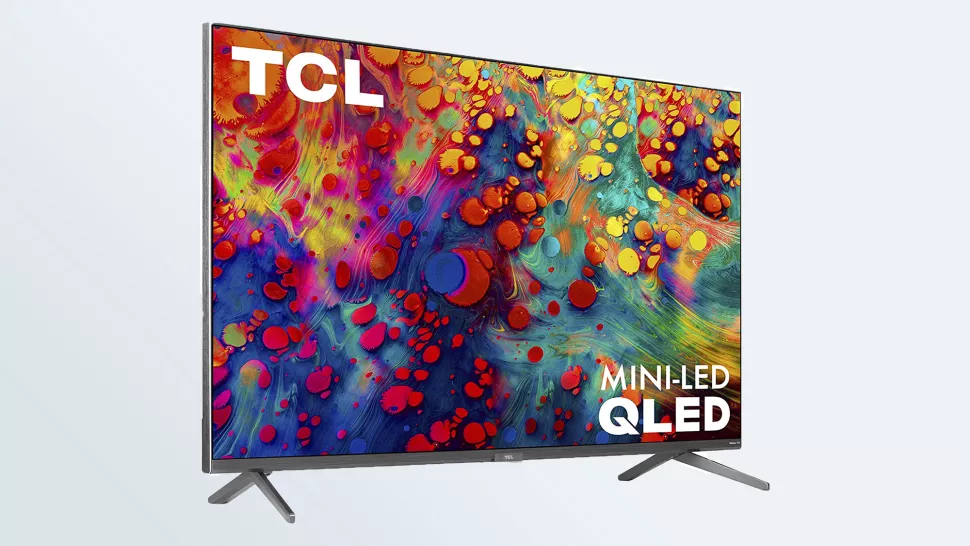
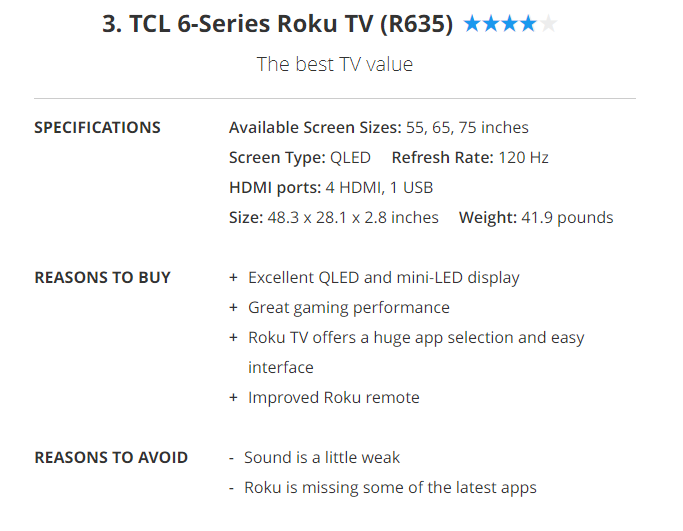
The TCL 6-Series Roku TV (R635) offers enormous value for it's affordable price, offering premium picture quality and a great smart TV experience for much less than the competition. As TCL's best mainstream smart TV the R635 ups the ante with mini-LED backlighting in addition to QLED. The result is impressive color and brightness, with some of the best HDR performance we've seen on anything this side of an OLED display.But TCL keeps delivering more, like THX Certified Game Mode, which makes the 6-Series one of the best gaming TVs available, even for yet-to-be-released consoles like the PS5 and the Xbox Series X. From the design's smart touches, like cable management in the stand, to the always-solid Roku TV platform, the TCL 6-Series R635 is the best TV value, and it's not even close.

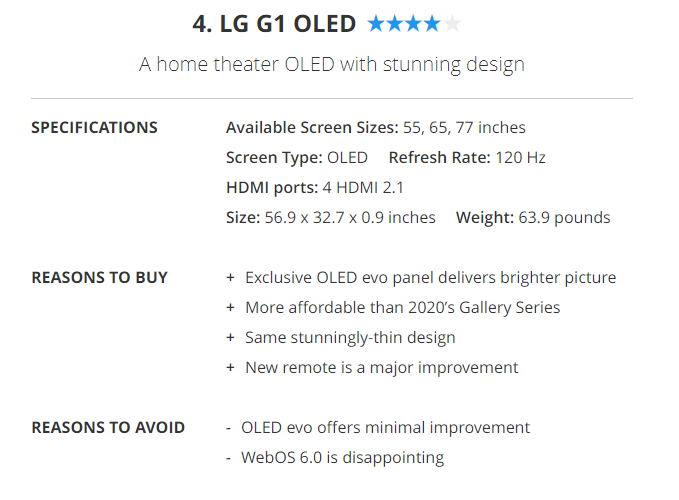
The LG G1 OLED TV is the updated version of LG's superb Gallery OLED, boasting a premium 20 millimeter-thick design and sleek flush-to-the-wall mounting setup. It's still the best 4K OLED TV made by LG, but as the first TV with LG's second-gen OLED evo technology, it falls short of some claimed performance improvements we were pretty excited for.That said, the LG G1 OLED is still an impressive OLED set, and LG has even knocked the price down a bit, while updating almost everything else about the set. The slim OLED features more comfortable remote control, enhanced gaming features, and the latest version of webOS, all while delivering the same excellent picture quality and impeccable sound that we expect from LG's best OLED models. The LG G1 OLED TV stands as a reminder of just how far modern TV technology has come — we just hope it hasn’t plateaued.
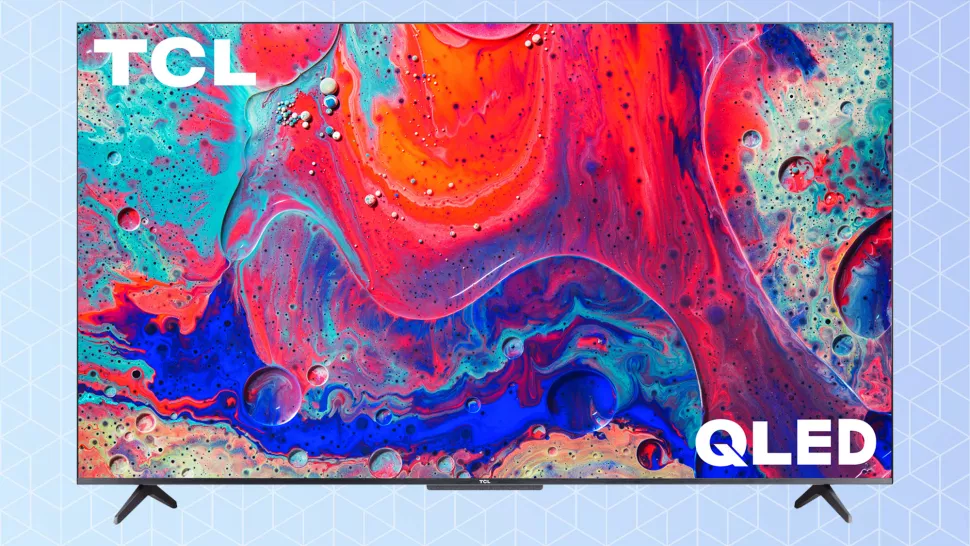
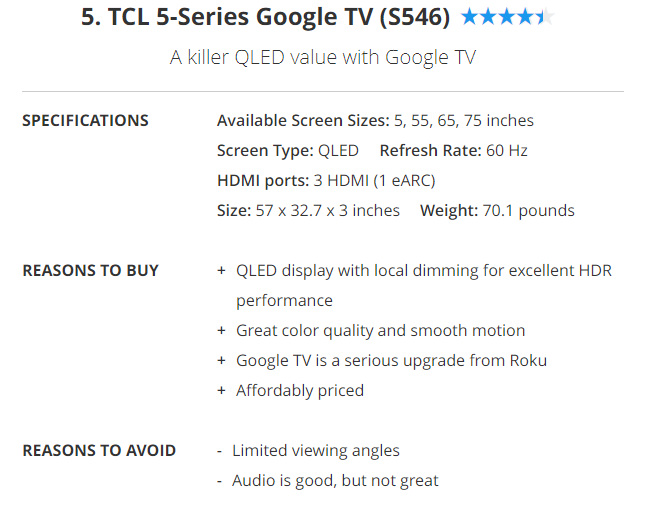
The TCL 5-Series Google TV (S546) wowed us with its combination of smart TV features, solid performance and great value for your dollar. Building on the foundation of the already-good 5-Series, the move to Google TV gives the affordable 4K smart TV a more premium smart TV platform, one that offers personalized and customizable suggestions, a huge assortment of smart features, and deep Google Assistant integration that makes it a viable center for the entire home of connected gadgets.But it also offers a step up in other aspects of the TV. From color quality to lag times, the 5-Series Google TV is a more polished version of the 5-Series TV, delivering an excellent QLED 4K display, a slick remote control, and a surprisingly wide array of gaming features for a 60Hz TV. For a smart TV that sells for under $1,000 for most size options, it's easily one of the best TVs on the market.
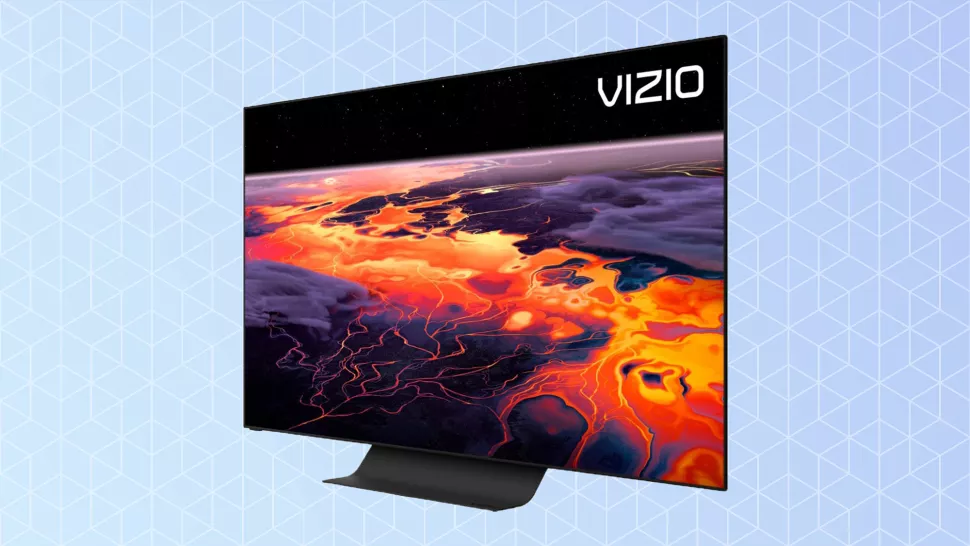
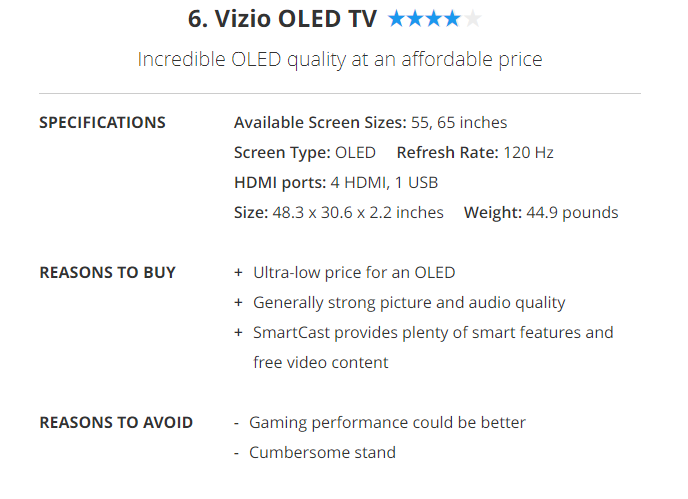
The Vizio OLED TV is the most affordable OLED TV on the market, and the first to offer a less-premium alternative to offerings from LG and Sony to shoppers in the United States. Selling for hundreds of dollars less than the competition, the Vizio OLED packs plenty of smart features alongside the 4K OLED display, and delivers the sort of premium picture quality that normally costs much more.Vizio's SmartCast smart TV platform has also expanded its app selection significantly, and all of the major apps you might want – from Netflix to Disney+ – are available right on the TV. The few that aren't offered on the home screen (HBO Max is the most glaring omission) can still be enjoyed through the TV's built-in Google Cast and AirPlay 2 support. Combine all of this with an improved remote control design and great sound with better-than-average bass, and you've got an easy pick for affordable OLED TVs.
If you're trying to find the right TV for you, there are several factors to consider, from the basics of screen size and resolution, to the specific smart features and ports offered on a given model. We recommend most homes opt for a 55- or 65-inch TV with 4K resolution. We're also big fans of smart TVs, which let you stream all of your favorite shows and use dozens of apps without a second device.
We have extensive shopping advice, like our TV buying guide and figuring out what size TV you should buy. And if you still have questions about smart TV features and capabilities, check out Smart TVs: Everything you need to know.
Performance: Our TV reviews also look at how well each TV performs in key areas, like picture quality and sound, so don't forget to look up the model you're interested in to see our TV reviews.
Ports: We generally recommend opting for more ports, so that you never have to manually unplug and re-plug HDMI cables to switch from your Bl-ray player to your game console or other device. Three ports is common, but nicer TVs usually have 4 HDMI ports. You'll also want make sure at least one is HDMI 2.1; our guide to the best HDMI 2.1 TVs can help here. (Still confused? Check out TV ports explained: What all those HDMI, USB and other connections are for?)
Extra USB ports are also handy for powering antenna amplifiers or streaming sticks, as well as viewing media from USB storage.
HDR: Most TVs offer high dynamic range (HDR) support, with Dolby Vision being the top format and HDR10 the most basic. But more important is the backlight, with OLED TVs and LED sets with local dimming offering the best HDR capabilities.
Smart software: Some of the TVs are among the best Alexa compatible devices and best Google Home compatible devices you can own, so pay attention to which smart home platform the sets offer before choosing.
Price: You can find smaller 4K TVs that sell for less than $500, which will spare you some cash for some of the best soundbars or best streaming devices to go with your set. However, you'll want to pay more for features like HDR support and a decent number of HDMI ports.
Generally speaking, you'll pay around $500 for a lower-price, 55-inch, 4K TV and at least $900 for a 65-inch model. Premium 4K TVs can sell for thousands of dollars, but we find that the sweet spot for superior performance and value is right around the $2,000 mark.
8K TVs, on the other hand, run from pricey to mortgage-your-house levels of expense, with new smaller models selling for as little as $3,000, but running up to the tens of thousands.
Get a broader view of everything the best TV brands have to offer by checking out the full roster of 4K and 8K TVs from every major manufacturer.
If you've narrowed down your TV shopping by brand, price range or screen size, check out our picks for the best TVs in each.
Evaluating TVs is about more than just kicking back to watch a movie. We lab test every TV, measuring color gamut, color accuracy and brightness to objectively see which sets are the best for these key indicators. We also test for lag time – a key detail for gaming – measuring to the millisecond how long it takes for content to travel from the original source to the screen. We use these results to make numbers-based comparisons about color and display quality.
We also spend time with each set for real-world evaluation and see how our lab results translate into more subjective performance. We also compare sets side by side and view samples from the latest movies, specialized test patterns that highlight strengths and weaknesses of each display, and a range of content across several sources. With that information, we can tell you which TVs look best, sound best and offer the best viewing experience.
Finally, we evaluate the smart TV functions and apps for each TV, looking at everything from the remote control design to the voice interaction